Opening a café: Financial risks – Coffee-Bike

18.09.2026
| Self-employment

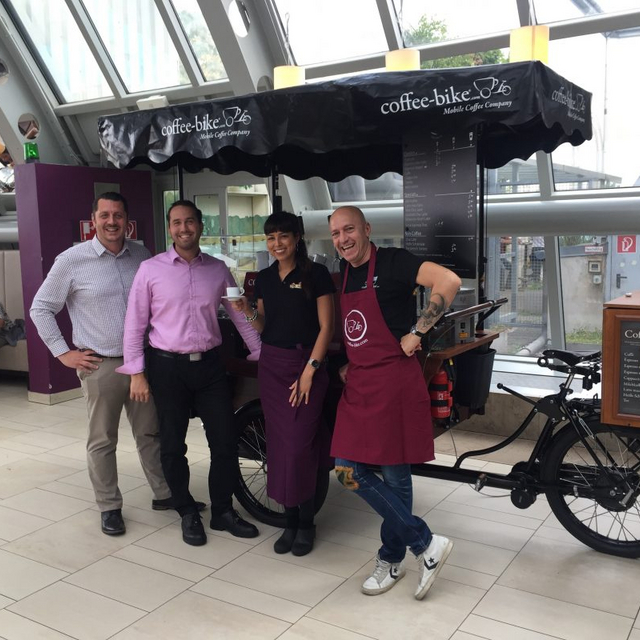
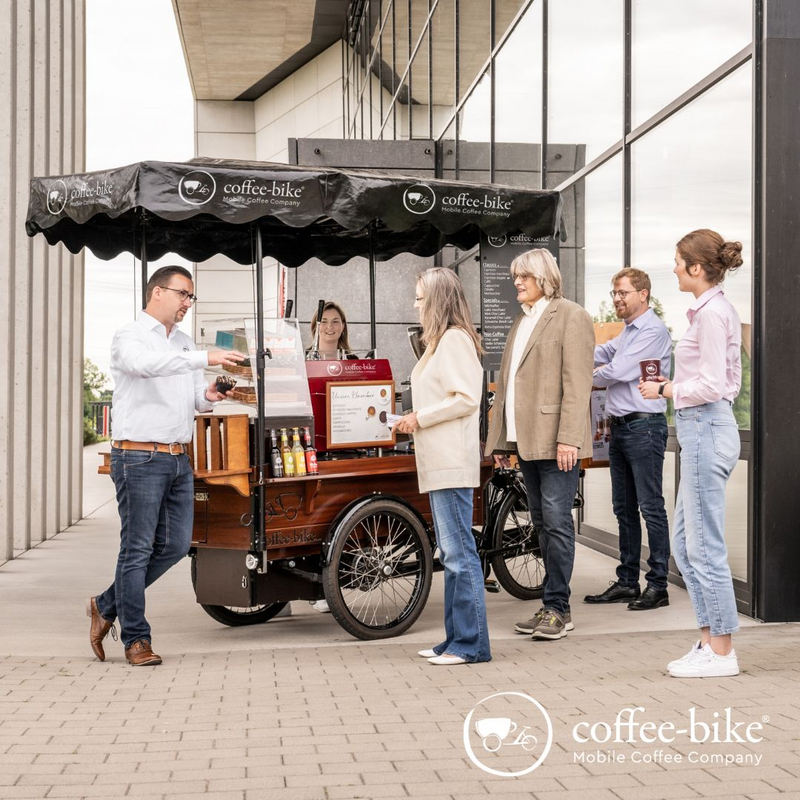
People standing in front of the Coffee-Bike

Anyone wishing to set up their own coffee business will, sooner or later, have to consider the financial commitments involved in starting up. Opening a café, in particular, carries risks that depend not only on demand, but also on how much capital is tied up before the first sale, what ongoing payments are involved, and how flexibly one can respond to changes.

It is worth comparing a brick-and-mortar café with a coffee bike operating within a franchise system. Both models come with their own opportunities and obligations. The main difference lies in the extent to which capital, location and running costs are tied up, and how much room for manoeuvre remains in the event of weaker demand.

What expenses do you incur before you sell your first coffee?

Anyone opening a café often needs to budget for investments even before selling their first coffee. Typical items include:

  • Rental deposit for the premises
  • Refurbishment and renovation work
  • Fittings and furnishings
  • Coffee machines and other kitchen equipment
  • Licences and initial stock
  • Initial stock of goods

It is important to distinguish between actual expenditure and tied-up capital. A security deposit, for example, is not a direct expense, but it is not available as a financial reserve for the duration of the tenancy.

Budget for premises, refurbishment and fittings

Particularly if you’re planning to open a café, there are costs that are often overlooked – and it’s not just the size of the investment that matters. Equally important is the question of how much cash will still be available after the opening. A café that is already kitted out may have different requirements to a completely new opening. As well as the rent for the premises, you should also draw up a plan for how you want to fit out your café. The equipment needed for making coffee must also be included in your calculations. It is therefore not possible to give a flat-rate figure for start-up costs.

What start-up costs are involved with a Coffee-Bike?

With a Coffee-Bike, various cost items typically associated with a fixed shop premises are eliminated. It is not necessarily required to rent premises or plan extensive refurbishments. Nevertheless, storage space for the Coffee-Bike and the stock itself is advantageous. Investments you should plan for in advance include:

  • Set-up fee
  • Initial order & start-up equipment
  • Business licence and health and safety certificate
  • Security deposit

In addition, there are monthly rent payments and other contractually agreed system fees. The specific costs incurred depend on the applicable terms and conditions and your individual plans.

What do you have to pay when fewer customers come in?

Many business decisions are made on the assumption that demand will develop as planned. However, for realistic planning, it is worth taking weaker months into account as well. It is precisely then that it becomes clear which financial obligations remain regardless of turnover. As a self-employed entrepreneur, you are not only responsible for your business, but also for your livelihood.

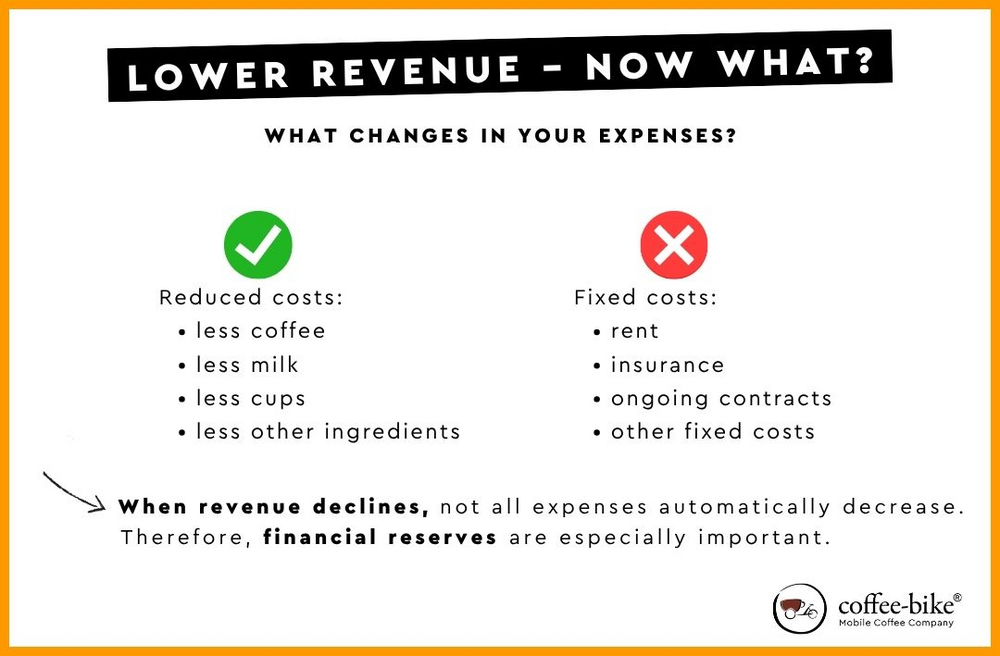
Distinguishing between fixed costs and sales-dependent costs

From an economic perspective, the distinction between fixed and variable costs is particularly important. Fixed costs may include, for example, rent, insurance, contractually agreed fees or other ongoing operating costs. Sales-related costs, on the other hand, are predominantly incurred when actual turnover is generated. These include, for instance, coffee, milk, cups or other consumables.

When fewer customers visit, expenditure on goods and consumables usually falls. However, many fixed costs continue unchanged.

The higher these fixed payments are, the more turnover must be generated to cover the running costs of the business. That is why the cost structure should always be considered alongside the expected turnover.

Why your working hours and standard of living matter too

When you’re self-employed, in particular, you can’t always completely separate business decisions from your personal life. Opening a small café, drawing up a budget and, at the same time, taking personal expenditure into account often means that business investments take priority. However, from a financial perspective, it’s also important to consider whether the business can support your personal living costs in the long term. After all, even as a founder, you want to be able to make a living from your business.

When you run a café, you’re investing not only money but also your working hours. At the same time, your personal expenses – such as rent, insurance and food – continue to mount up. That’s why it’s not enough if only a small amount remains after business costs have been deducted.
What can you do if your location isn’t working out?

One aspect of the risks involved in opening a café that is often underestimated is the dependence on the location. The quality of a location influences visibility, customer footfall and, as a result, often the business’s financial performance.

In the case of a fixed-location café, the following questions might arise:

  • What obligations arise from the tenancy agreement?
  • What costs will continue to be incurred?
  • What would be the consequences of moving to a new location?

With a mobile Coffee-Bike, on the other hand, questions such as the following often arise:

  • What alternative locations are feasible?
  • What permits are required?
  • What additional costs would a change of location entail?

The advantage lies not in a guarantee of success, but in the additional scope for adaptation.

How contracts and investments tie you to a location

With a brick-and-mortar café, a large proportion of the investment is directly linked to the chosen location. Lease agreements, refurbishments and fittings cannot easily be transferred to another location. If customer footfall is lower than expected, a change of location can involve additional organisational and financial effort. Ongoing lease agreements and investments already made limit the scope for action.

The opportunities and conditions offered by a mobile business

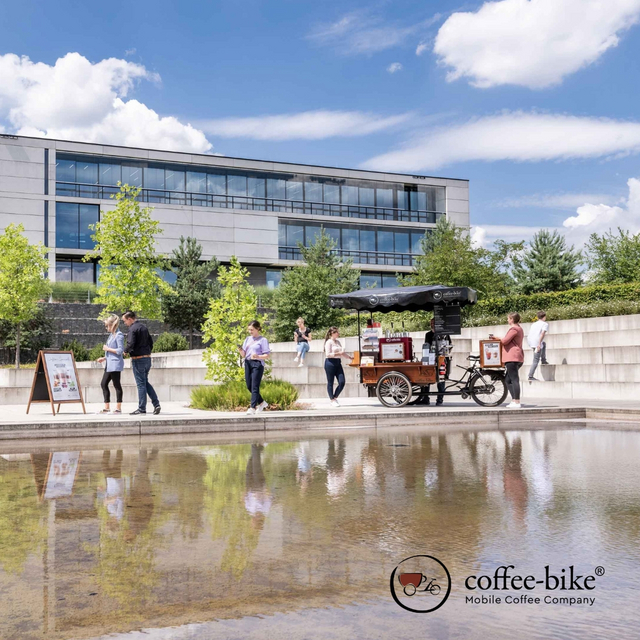
A coffee bike is, by its very nature, less tied to a single location. This can open up additional options if demand at a particular location falls short of expectations. However, mobility does not mean that every new location will automatically be successful. Even with a mobile business, permits, organisational requirements and actual demand must be taken into account. Contracts with the site operator should also be reviewed in this regard.

What financial commitments remain even with a Coffee-Bike?

A lower capital requirement does not automatically mean lower overall financial commitments. For a fair comparison, all payments and contractual commitments that may arise throughout the entire operating period should be taken into account. These include contracts for fixed sales locations or venue fees for events. Whilst the potential uses of a Coffee-Bike are flexible, they must still be planned and organised. As a franchise partner, you enter into a 4-year contract which, as a rule, does not provide for the option to terminate it.

Considering ongoing payments and contract duration together

Regardless of the business model, there are ongoing obligations that extend beyond the actual start-up phase. These include, for example:

  • ongoing contractual payments
  • insurance
  • fixed operating costs
  • contract terms
  • possible conditions for early termination

Only by considering these factors as a whole is it possible to make a realistic comparison of the financial burden.


What can make preparation easier – and what you’ll need to do yourself

The franchise system can reduce certain uncertainties before you start. These include, for example, structured preparation for operational processes or support with organisational issues. This support can help you avoid typical mistakes before you get started. To begin with, we’re happy to plan your first assignments together and offer guidance on approaching event and catering clients in your region. We’ll also support you in marketing your Coffee-Bike locally.

At the same time, key business responsibilities remain the franchisee’s responsibility.

These include, in particular:

  • Business development and customer acquisition
  • Marketing and advertising
  • Operational organisation and bookkeeping
  • Cost control and financial planning
  • Business decisions in day-to-day operations

Potential franchise risks should therefore always be considered alongside the support services on offer.

You should compare these financial commitments

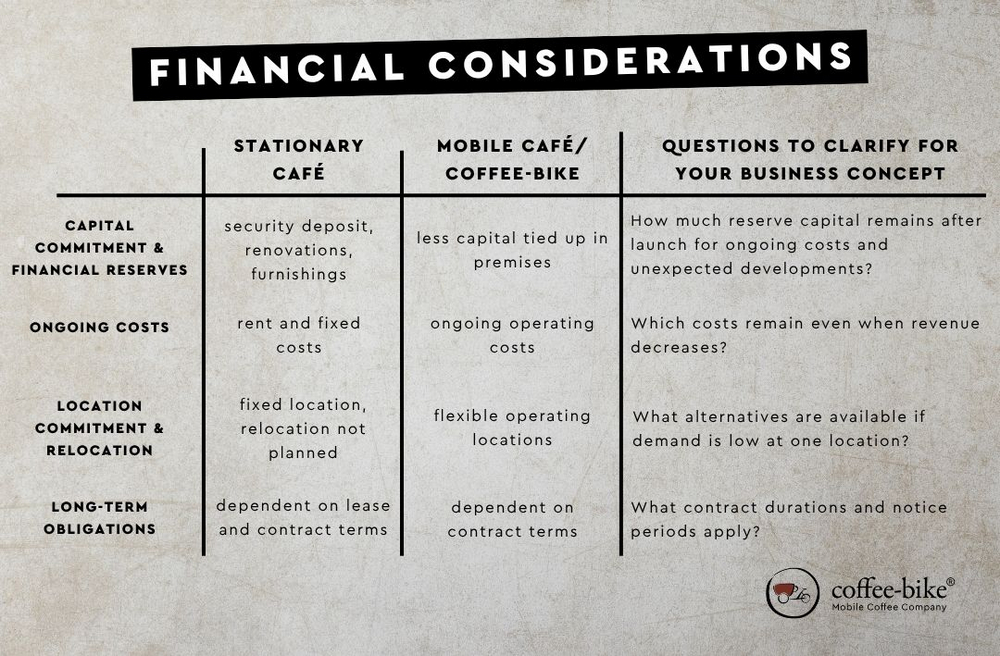
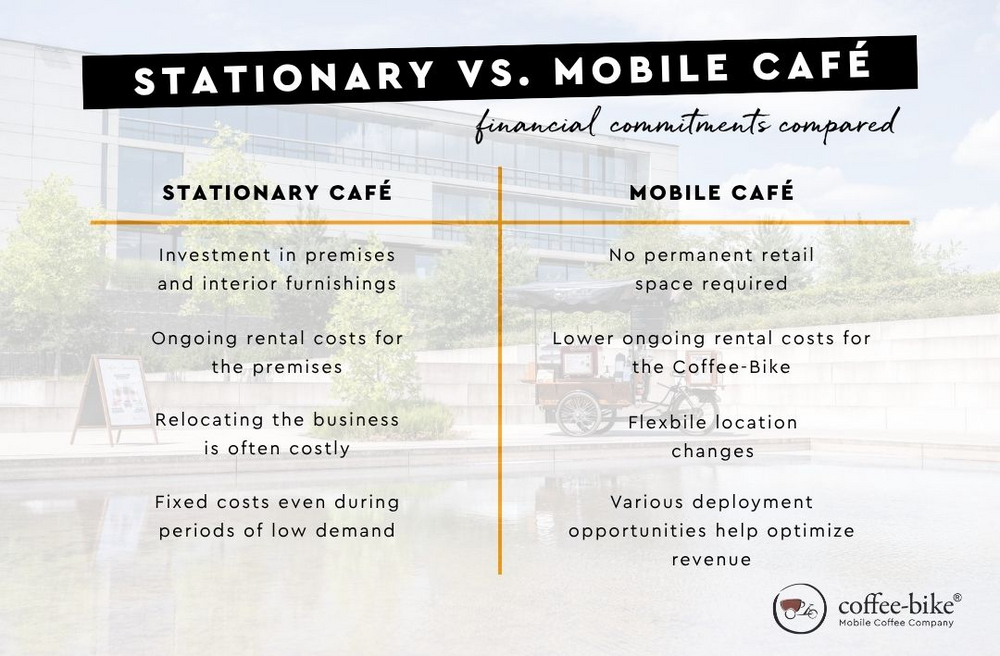
For a fair comparison, it is not enough to look solely at the initial costs. Other crucial factors include how much capital is tied up before the business starts, the size of the financial reserve, which ongoing obligations remain even if demand is lower, how flexibly you can respond to changes in the location, and what long-term contractual obligations arise. The following overview sets out the key points you should compare when drawing up your individual plan.

Find out about the costs and requirements for starting your Coffee-Bike business

Every business start-up situation has its own specific requirements. That’s why the financial risks involved in opening a café cannot be assessed on a one-size-fits-all basis, nor can they be fully described using general average figures. Sign up for a free information session and get answers to your questions about costs and requirements.

Further questions about the financial comparison

On our franchise page, you’ll find information about costs and getting started with Coffee-Bike. Below, we’ve summarised the key answers for you once again.

Is a small café automatically less risky?

No. Whilst the initial investment may be lower, factors such as location-specific commitments and ongoing obligations remain economically relevant.

What changes if I take over a café that is already fully equipped?

Existing equipment can reduce the capital required. At the same time, existing contracts and other obligations should be carefully reviewed.

Why should I compare one-off and ongoing payments separately?

One-off expenses primarily affect the start-up capital required. Ongoing payments, on the other hand, determine which financial obligations remain even during periods of lower turnover. Both areas should therefore be considered separately.

Become a self-employed Coffee-Biker

Online webinar Online webinar