Veganuary may be over, but plant-based milk alternatives are no longer just a passing trend. For many, they have found a permanent place in the fridge, because good vegan coffee enjoyment doesn't end after a month. That's why our mobile coffee bar offers plant-based milk alternatives for your coffee specialities all year round. In this blog post, we'll show you what vegan drinks are available, whether they're suitable for coffee and what benefits they offer.
Milk substitutes – the best milk alternatives for your coffee
30.01.2026 | Coffee know-how
What are milk substitutes and what are milk alternatives?
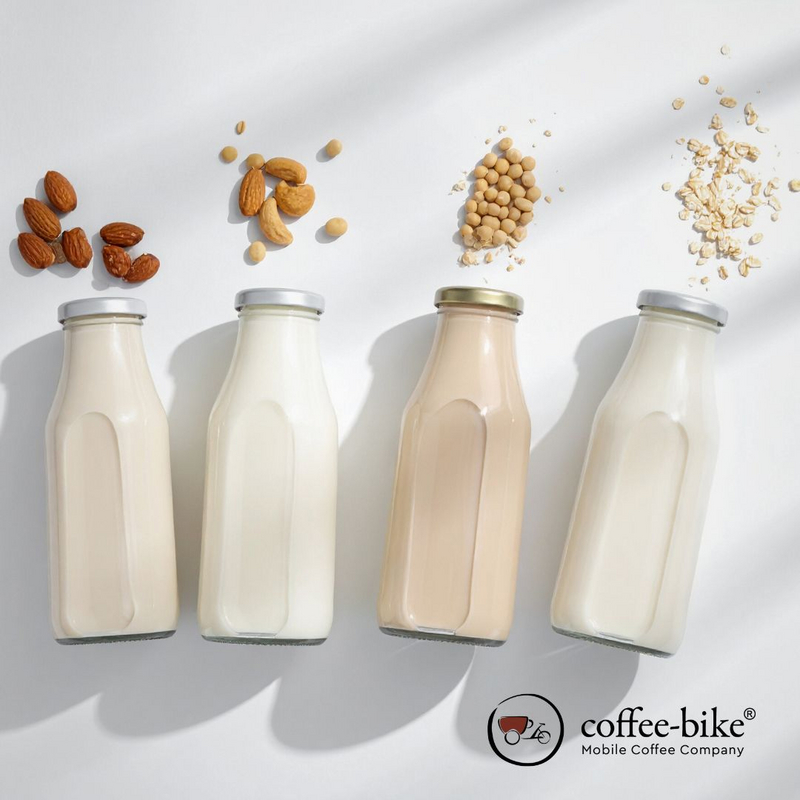
Milk substitutes or milk alternatives are plant-based drinks that are quite similar to normal cow's milk in terms of appearance and taste. Although they differ slightly in their nutritional content, they do not contain any animal ingredients. They are made from plant-based ingredients such as grains, nuts or legumes and are therefore completely vegan. Plant-based drinks are now very versatile and have become an indispensable part of many kitchens. They are excellent in coffee and coffee specialities, but can also be used for cooking and baking. They are also a popular alternative for puddings, rice pudding, muesli or porridge. Many varieties are delicious even when drunk straight from the glass and offer a nice change from classic cow's milk.
Did you know that...
...vegan alternatives are not actually allowed to be called ‘milk’? Colloquially, we often refer to oat milk or plant-based milk, but legally this is not permitted in Europe. Only products that can be understood as ‘the milk of one or more cows’ may officially be called milk. That's why you'll usually find the term ‘plant-based drink’ instead of milk on packaging in the supermarket.
Why are more and more people turning to plant-based milk?
There are many different reasons why more and more of us are turning away from cow's milk. For some, health plays an important role, as around 15 to 20 percent of adults in Germany are lactose intolerant. Although lactose-free cow's milk is available, in which the milk sugar has already been broken down, it is still based on animal milk and is therefore difficult for some people to digest. Plant-based drinks are a digestible and simple alternative in this case. Others consciously avoid cow's milk because they care about animal welfare and climate protection. Conventional milk production is very resource-intensive and causes large amounts of greenhouse gases such as CO2.

What vegan alternatives to cow's milk are there?
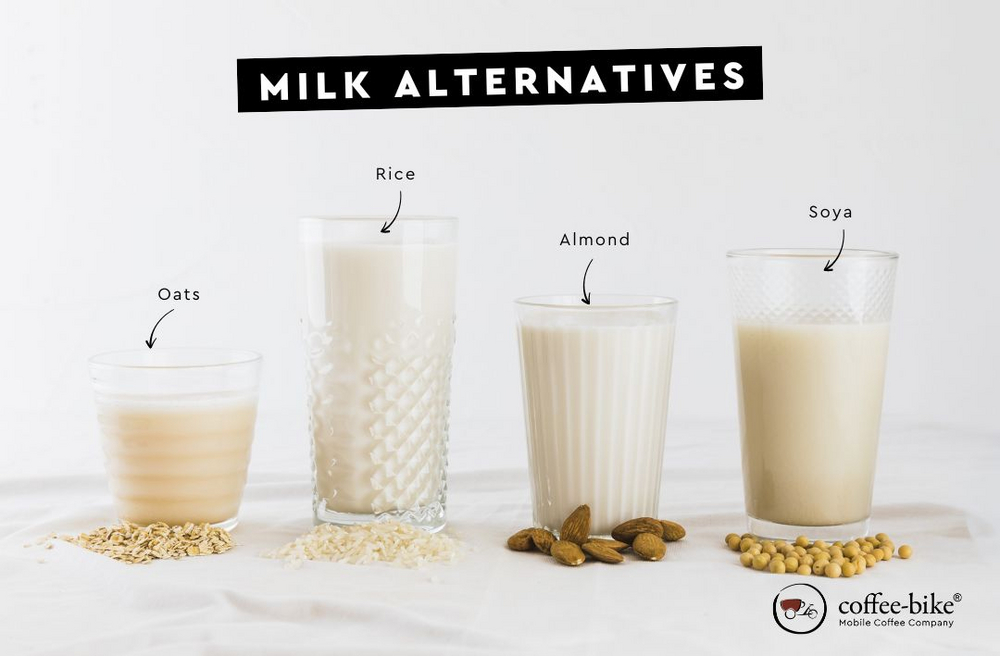
A few years ago, the selection of milk alternatives was still limited. Today, things look very different. Many manufacturers now offer a wide variety of plant-based drinks. The best-known alternatives include oat, almond and soy drinks. There are also products such as pea, rice, spelt and lupin drinks. Each drink has its own unique flavour. So why not organise a little tasting session with friends and find out which drink you like best with coffee?
How are milk substitutes made?
The main ingredients, such as oats or almonds, are first soaked in water or boiled and then finely ground. The mixture is then filtered to produce a milk-like liquid. Finally, depending on the plant-based drink, calcium, vitamins or oil are added to balance the taste, consistency and nutritional values.
Do alternative milk products also contain calcium and protein?
The most protein-rich plant-based drinks are soya and pea milk. They come quite close to the protein content of cow's milk. However, the situation is different when it comes to calcium: most milk alternatives naturally contain significantly less of it. Many manufacturers therefore specifically enrich their drinks with calcium to increase the nutrient content. Caution: this is not legally permitted for organic products, so it is always worth checking the list of ingredients to make sure you are getting enough nutrients.
Best milk substitute for coffee – taste, foam & barista suitability
For many coffee fans, black coffee is not their first choice. Creamy drinks such as cappuccino or latte macchiato with milk (alternatives) are much more popular. But which plant-based drink tastes really good and which milk alternative is best for perfect milk foam? We'll show you which options for coffee really convince us!
Which substitute is best for coffee?
When it comes to taste, it's impossible to say definitively which plant-based milk is best. It's entirely individual and depends on what you personally like best. The situation is different when it comes to frothing: here, the special barista versions perform better than the normal substitutes. They are enriched with additional proteins and stabilisers so that they can be frothed to be almost as creamy as cow's milk.
Which milk substitute tastes like milk?
No plant-based milk quite matches the taste of real cow's milk, that much is clear. Nevertheless, oat milk is considered the most popular alternative because it is mild, slightly sweet and creamy. Soy milk can also be similar in taste, while almond or rice milk have their own distinctive flavours.
Almond, oat or soya milk in coffee – advantages and disadvantages
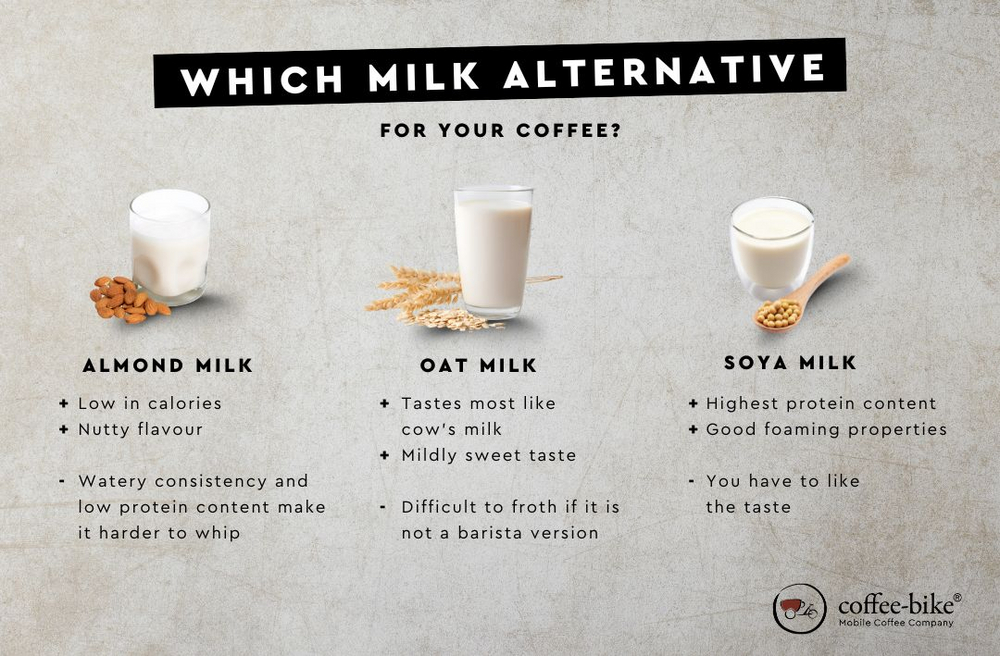
Every plant-based milk has its strengths and weaknesses. Here is a brief overview of the three most popular plant-based drinks that are most commonly used in coffee:
Almond milk in coffee:
- Advantages: Almond milk is low in calories and has a slightly nutty flavour. It can give your coffee a subtle amaretto note.
- Disadvantages: The protein content is relatively low and its rather watery consistency makes it difficult to froth.
- Tip: For coffee, we recommend the barista version, which has been specially developed for stable milk foam.
Oat milk in coffee:
- Advantages: Oat milk tastes mildly sweet, is creamy and foams well. It has a more neutral taste than almond or soy milk and goes well with almost all coffee drinks.
- Disadvantages: The protein content is lower than in soya milk. Here, too, the barista version is worth using for cappuccino or latte for better foam.
Soya milk in coffee:
- Advantages: Soya milk has the highest protein content of the three drinks. This ensures very good foam formation.
- Disadvantages: It has a distinctive taste that not everyone likes.
Oat milk – popular and healthy or an overrated milk alternative?
As you have already learned, oat milk is one of the most popular plant-based milk alternatives. But what exactly is in this drink, and is the myth that you shouldn't drink oat milk in the morning really true? In this section, we will take a look at how healthy oat milk is, what nutrients it provides, and what you should keep in mind when consuming it.
Is oat milk healthy?
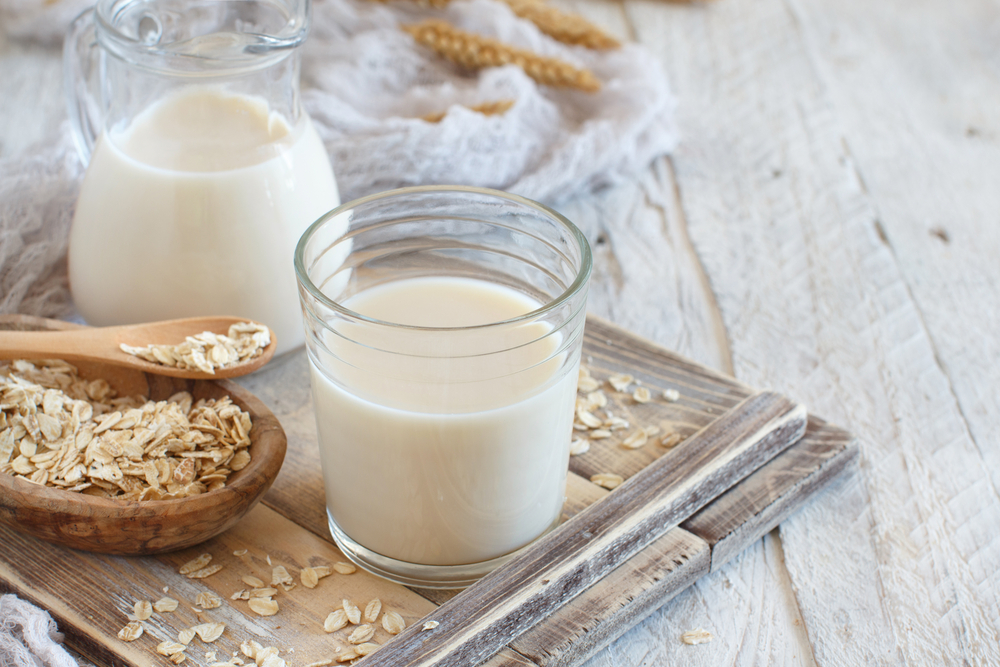
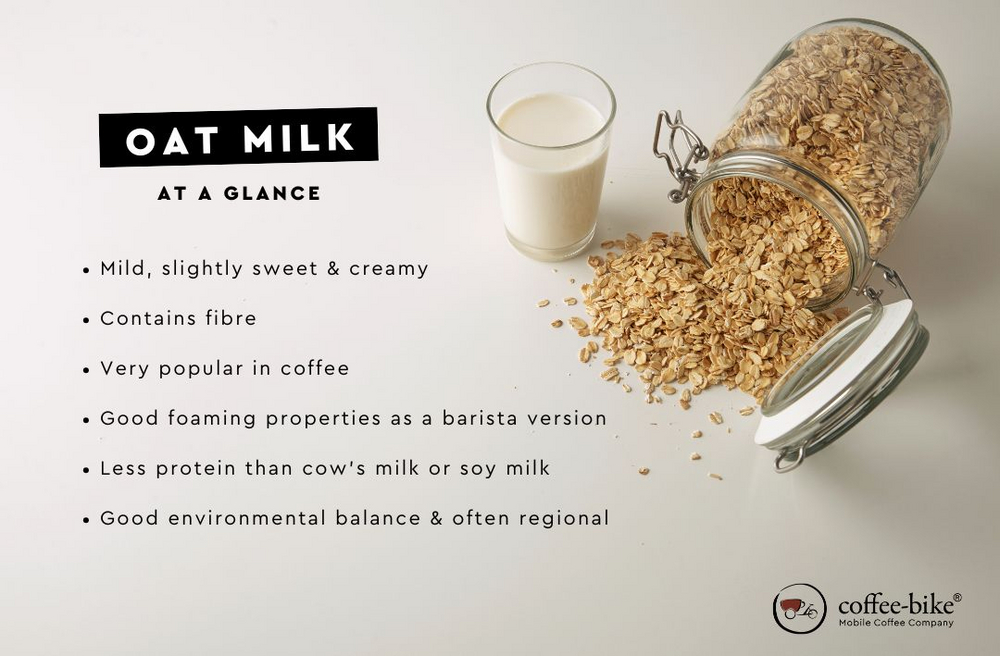
Oat milk is a good alternative to cow's milk, especially for vegans and people with lactose intolerance. It contains fibre, which keeps you feeling full for longer and can have a positive effect on digestion and cholesterol levels. Oat milk also scores highly in terms of sustainability. Organic oats often come from Germany and require comparatively little water to produce.
At our Coffee-Bike, you can usually get all coffee specialities with organic milk alternatives. Our most popular choice, oat milk, also comes exclusively from organic farming. So you not only enjoy a delicious coffee, but also do something good for yourself and the environment.
Why is the oat-based alternative criticised?
We often hear that oat milk is viewed critically because of its sugar content. However, the sugar occurs naturally, as oats consist of starch, some of which is converted into sugar during processing. This can cause blood sugar levels to rise slightly faster than with cow's milk or soya milk. This can be particularly noticeable in the morning on an empty stomach, as oat milk contains little protein to balance blood sugar levels.
Therefore, you should not drink oat milk on its own in the morning, but combine it with a balanced breakfast. In healthy people, however, blood sugar levels usually regulate themselves back to normal quickly. It is important to listen to your body and seek medical advice if you are unsure.
Focus on almond milk – advantages, disadvantages & tolerability
Alongside oat milk, almond milk is one of the most popular plant-based alternatives. It is particularly appealing due to its mild taste and good tolerability. But how healthy is almond milk really, and what are its weaknesses?
Is almond milk really that healthy?
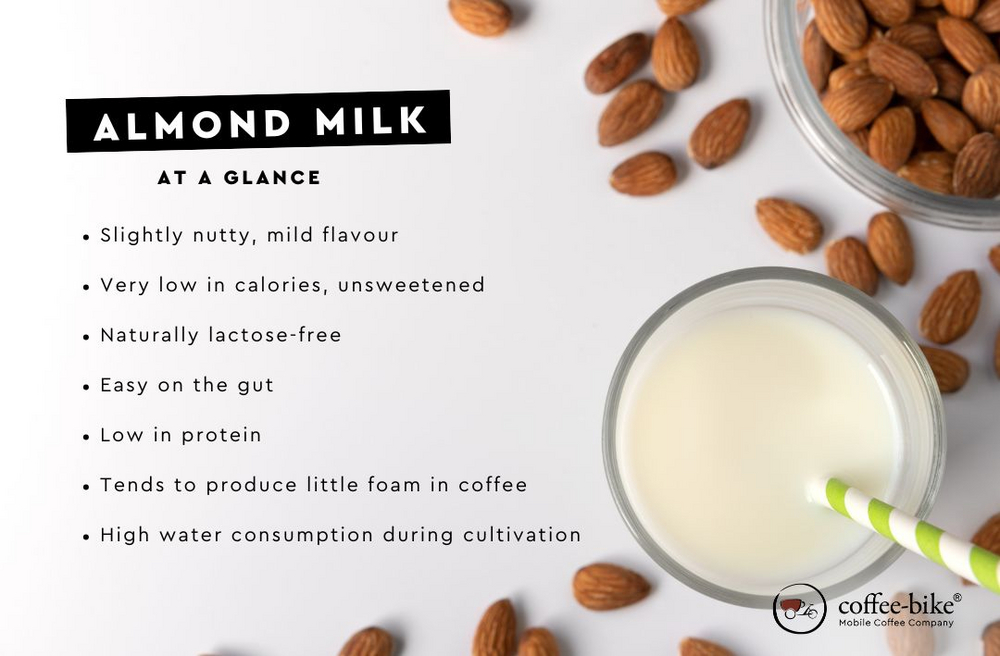
Almond milk scores particularly well for its low calorie content. Unsweetened almond milk contains only about 24 kcal per 100 ml, while oat milk has around 45 kcal and soy milk around 52 kcal. Coconut milk is significantly higher, containing around 190–200 kcal per 100 ml, depending on the product. By comparison, classic whole milk with 3.5% fat contains around 64 kcal per 100 ml, even as UHT milk, as the calorie content does not change during preservation. Almond milk also provides unsaturated fatty acids, which can have a positive effect on cholesterol levels. This makes it a popular choice, especially for calorie-conscious diets.
Is almond milk good for the gut?
Did you know that the effect of coffee on the body can also be influenced by which milk alternative you choose? Unsweetened almond milk can be good for the gut, especially for people with lactose intolerance. Since it does not contain lactose, it does not cause typical symptoms such as flatulence or abdominal cramps. Its low sugar content also helps to keep the gut flora in balance. However, it is important to check the list of ingredients, as additives such as carrageenan can cause inflammation or intolerance in sensitive individuals.
Are there any disadvantages to almond milk?
Compared to cow's milk, almond milk contains significantly less protein, calcium and other important vitamins and minerals. These nutrients should therefore be compensated for through a balanced diet. The environmental impact is also often viewed critically, as almond cultivation is very water-intensive. In addition, transport distances are long, as many almonds come from California.
Oats or almonds – which is the better substitute for milk?
There is no such thing as the perfect milk substitute, as the choice depends on your personal needs. Almond milk is low in calories and fat, making it ideal for a healthy diet or weight loss. Oat milk provides more vitamins and fibre and usually scores better in terms of environmental impact. However, oat milk also contains more sugar. Ultimately, it comes down to what is more important to you personally: calories, nutrients or sustainability.
Plant-based drinks as an alternative to cow's milk
You have now learned a lot about vegan milk alternatives. But the question arises: Can cow's milk really be completely replaced? And how do plant-based drinks compare in terms of nutritional value?
Whether you like your coffee with cow's milk or a plant-based alternative, Coffee-Bike's coffee catering service will satisfy every wish.
Can plant-based drinks replace cow's milk?
‘Milk makes you strong’ – this image has been associated with cow's milk for decades. And that's not entirely wrong, because cow's milk provides important nutrients such as protein, calcium and vitamins B12 and B2. It supplies the body with energy and important building blocks for bones and cells.
With plant-based drinks, the nutritional value depends heavily on the respective base. By nature, they usually do not contain the same amount of protein or calcium as cow's milk. So if you consume little or no dairy products, you should make sure to choose fortified plant-based drinks or obtain these nutrients from other sources. Protein is found in legumes, for example, and calcium is found in green vegetables. A balanced diet is the key here.
Tips for choosing your milk alternative
- Organic milk alternatives must not be fortified, so calcium and vitamin B12 should be obtained from other foods.
- Shake plant-based drinks well before drinking, as calcium can settle at the bottom.
- Milk alternatives made from legumes usually provide more protein and support protein intake.
- Barista varieties are ideal for coffee, as they foam better and are creamier.
- Unsweetened varieties contain less sugar and are often better tolerated.
Which plant-based milk is the healthiest?
There is no such thing as the healthiest plant-based milk. Every plant-based drink has its own strengths and weaknesses. Which type is best for you depends on your personal needs, your lifestyle and also the manufacturer. It is particularly important that you are well informed – similar to coffee during pregnancy – so that you always make the right choice for you and get the best nutrition.
Nutritional comparison of the most popular alternatives to cow's milk
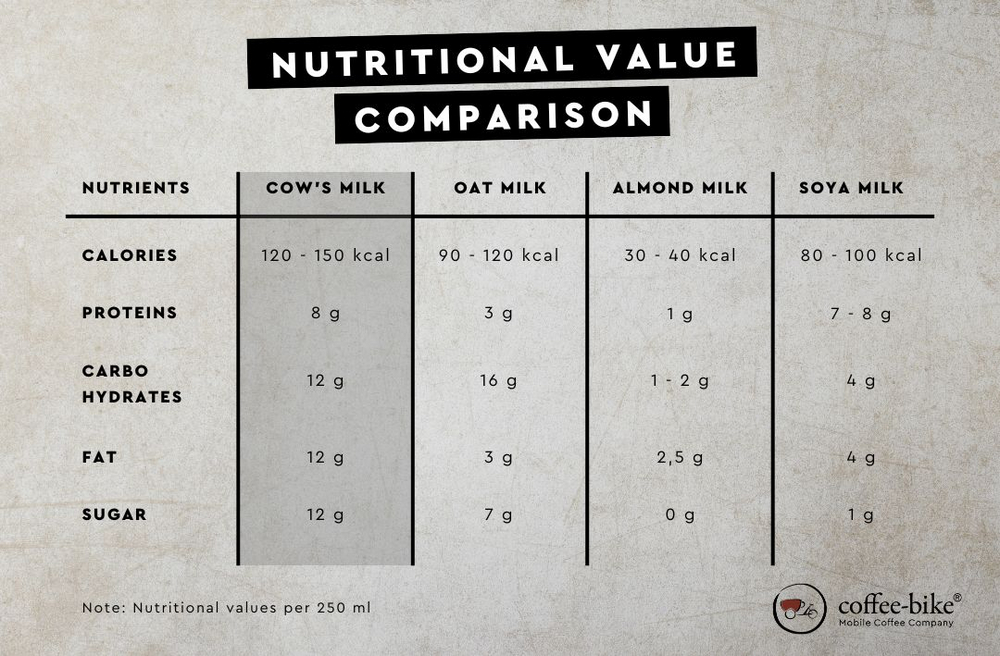
A glance at the nutritional values quickly shows how different plant-based milk alternatives really are, especially in terms of calories, protein, sugar and calcium. The following table helps you compare the most important differences at a glance and find the right alternative for you.
In the end, it becomes clear that every plant-based milk has its own strengths and the best choice is the one that suits your personal needs and everyday life.
Which milk substitute suits which lifestyle?
Those who want to lose weight often choose almond or rice milk because they are particularly low in calories. For anyone looking for a plant-based milk that tastes closest to cow's milk, oat milk is a good choice. Environmentally conscious consumers also opt for oat drinks from regional cultivation. Active people benefit from soya milk because it is high in protein. The most important thing is that the milk substitute fits into your everyday life and tastes good to you. That's the only way it will stay in your fridge for the long term.
The best alternatives to cow's milk
Vegan milk alternatives are not only perfect for latte macchiato or cappuccino. They are also gaining importance in many other foods. Whether in yoghurt, cheese, desserts or ready meals, milk is found in many more products than you might think at first glance. This means that if you want to avoid cow's milk, you should also look for suitable vegan alternatives here.
The easiest way is to cook and bake yourself. This allows you to specifically choose the milk alternative that suits your recipe and your taste. If you shop consciously and cook for yourself, you also have full control over sugar, fat and additives.
And if you value organic quality, you're in luck: at Coffee-Bike, our cow's milk, milk alternatives and coffee and espresso beans are all organic.
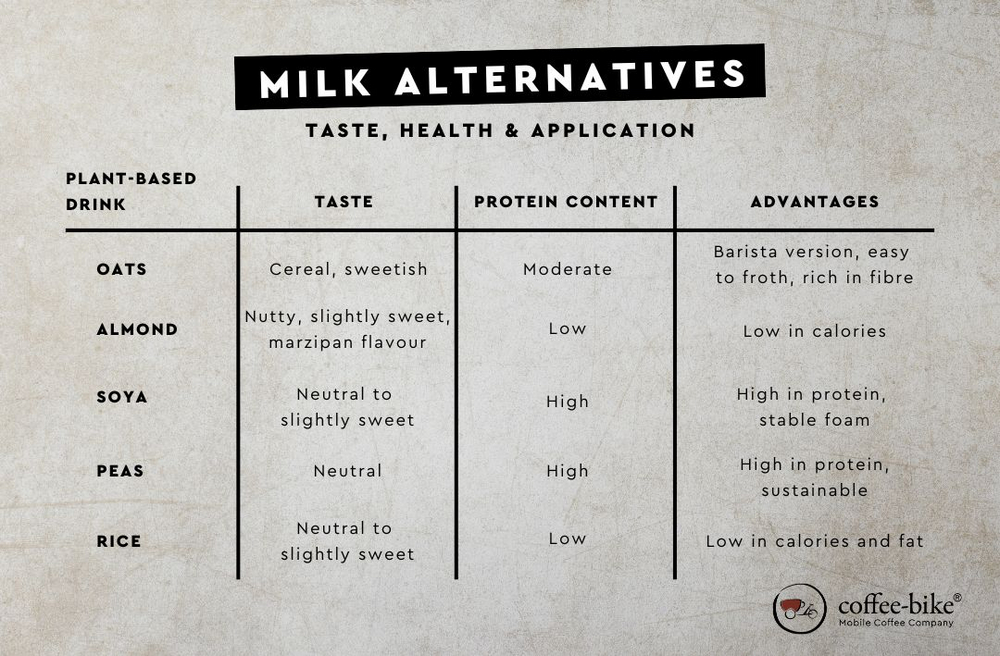
Milk substitutes according to taste, health & application
Now you have a broad overview of the topic of milk alternatives. In the following table, we summarise once again which plant-based drinks have which strengths and possible uses. This allows you to see at a glance which alternative best suits you, your coffee and your recipes.
FAQ – Frequently asked questions about milk substitutes, plant-based drinks and milk alternatives
Which milk substitute is best for coffee?
That depends on what you value. Oat milk is particularly popular because it tastes mild, is creamy and foams well. If you want a lot of protein, go for soya milk, which also forms good foam. Almond or rice milk are more suitable for lighter coffees or smoothies, but they don't foam as well. For perfect milk foam, the barista version is worth it for all drinks.
Which plant-based milk is the healthiest?
There is no ‘single’ healthiest milk; each type has its advantages. Soy milk provides a lot of protein, oat milk scores high in fibre and vitamins, and almond milk is low in calories and contains vitamin E. The most important thing is that the milk suits your lifestyle: protein, calories, taste and environmental aspects all play a role here.
What is the difference between oat milk and barista oat milk?
Barista oat milk is specially developed for coffee. It contains more protein and sometimes a little fat to keep the milk foam stable. Normal oat milk is more neutral and creamy, suitable for drinking or with muesli, but does not foam as well.
Is almond milk really a healthy alternative?
Yes, but with limitations. Almond milk is low in calories, contains vitamin E and unsaturated fatty acids, and is lactose-free. However, it is low in protein and naturally contains very little calcium, so you should obtain these nutrients from other sources. If you eat a balanced diet, you can easily incorporate almond milk into your daily routine.
Are there vegan milk alternatives at the Coffee Bike?
Yes, definitely! All participating Coffee Bikes offer coffee specialities with plant-based milk alternatives. Organic oat milk is particularly popular, as it foams well in all coffee drinks.
And best of all, you can even turn your hobby of coffee into a career! As a franchise partner, you have the opportunity to run your own mobile café and offer our great products, including vegan milk alternatives. Feel free to register for a free, no-obligation webinar to learn more about the Coffee Bike and our concept.
These articles might intrest you:



Difference between cappuccino and latte macchiato – the Coffee-Bike classics
03.08.2022 Read article