Is it true that coffee contains calories, and if so, how many? If you’re watching your diet or perhaps even want to lose a few pounds, you’ve probably asked yourself this question before. After all, for coffee lovers, coffee is as much a part of daily life as brushing your teeth in the morning. Reason enough to take a closer look at this popular pick-me-up.
Coffee calories: How many calories are there really in black coffee, cappuccino or coffee with milk?
22.06.2026 | Coffee know-how
H2: Does coffee contain calories? What you need to know first
- Black coffee contains only about 2 calories per cup, making it one of the lowest-calorie drinks.
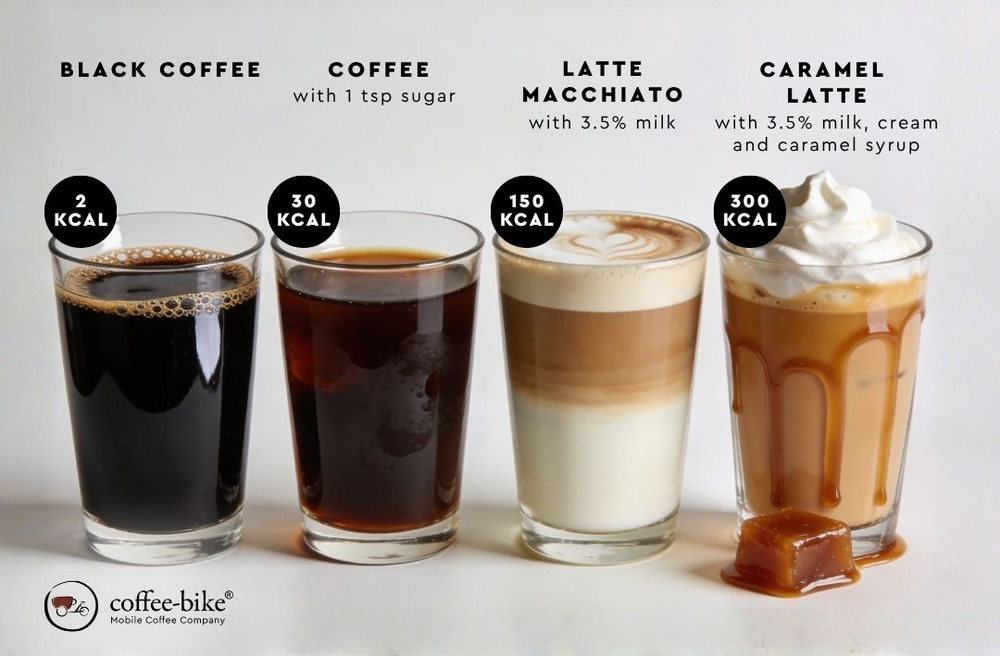
- A latte macchiato usually contains between 100 and 200 calories, depending on the milk and size.
- Most of the calories do not come from the coffee itself, but from ingredients such as milk, sugar, syrup or cream.
- If you want to lose weight, you can easily include coffee in your diet, but you need to keep an eye on the extras.
Why coffee is so low in calories
It is a common misconception that black coffee is completely calorie-free. That isn’t entirely true. A cup of black coffee does contain calories, but fewer than ten per cup.
The reason is simple: coffee consists of around 98 per cent water. Very few of the coffee beans’ nutrients make it into the cup, which is why the calorie content is so low. It therefore makes little difference to your calorie tracker. If you want to cut calories when drinking coffee, you should therefore focus less on the coffee itself and more on the ingredients you add to it. It is the milk, sugar or your favourite syrup that turn this low-calorie pick-me-up into a much more substantial coffee speciality.

Black coffee, coffee with milk and cappuccino compared
Black coffee is therefore virtually calorie-free. Yet very few people drink their coffee strictly black. Perhaps you like a dash of milk in yours, or you prefer to start the day with a creamy cappuccino. This is precisely where the biggest differences in calorie content come into play.
How many calories does coffee really have?
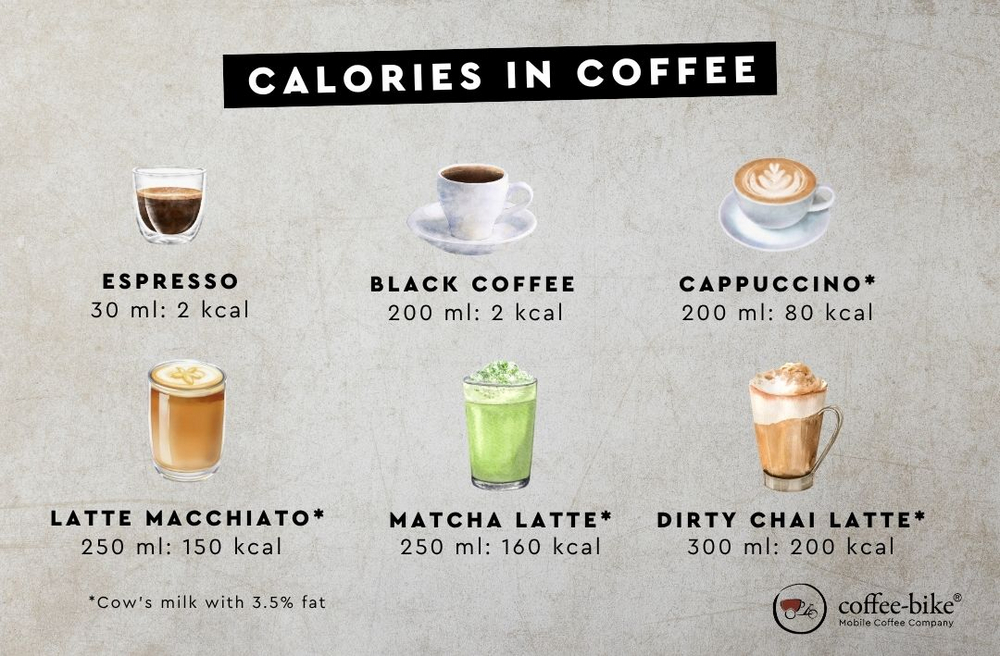
The answer is: it depends on what ends up in your cup. The coffee bean itself contains around 211 kilocalories per 100 grams. However, as only a small amount of ground coffee is used for a single cup, hardly any of these calories remain. An espresso or a cup of black coffee therefore usually contains only about 2 calories. So if you drink your coffee black, you hardly need to worry about the calorie content.
We explain how many calories there are in coffee with milk
From this point on, it’s mainly your personal taste that determines how many calories end up in your cup. If you add just a small splash of milk – around 20–30 ml – to your coffee, this adds about 10 to 20 calories. If, however, you prefer a latte macchiato, the milk content is significantly higher at 200 ml.
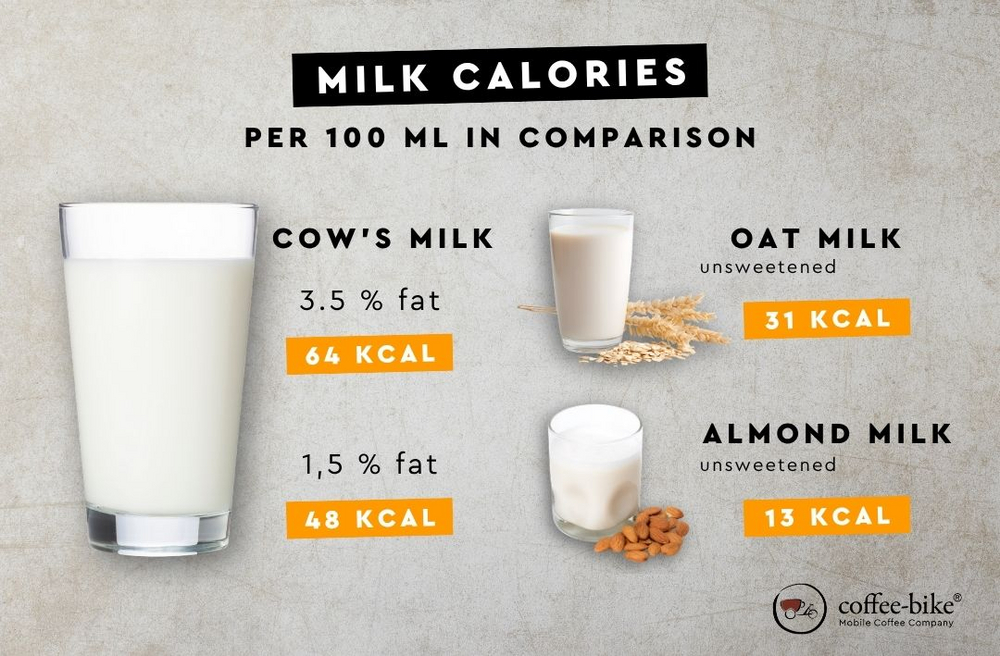
For standard cow’s milk, you can roughly expect the following values:
- Whole milk (3.5% fat): around 64 kcal per 100 ml
- Skimmed milk (1.5% fat): around 47 kcal per 100 ml
Plant-based milk alternatives are also becoming increasingly popular. Whether it’s oat, almond, soya or coconut drink, the calorie content can vary significantly. Whilst unsweetened almond drinks are often very low in calories, some oat drinks contain a similar number of calories to low-fat cow’s milk. It’s therefore always worth checking the packaging.
Why cappuccino or latte usually has more calories than expected
In drinks such as cappuccino, latte or latte macchiato, milk plays the leading role. Whilst an espresso makes up only a small part of the drink, the rest consists largely of milk and milk foam.
This is why the calorie count is particularly high in cappuccino. This is because milk with a higher fat content must be used to achieve a particularly creamy and stable milk foam. The more milk that ends up in the cup, the higher the calorie count naturally becomes. Let’s take a typical example: a cappuccino containing around 200 ml can contain roughly 70 to 100 calories, depending on the type of milk. A large latte macchiato with around 250 to 300 ml of milk, on the other hand, can easily reach 120 to 180 calories. If sugar or syrup is added, the calorie count can be significantly higher.
The situation is similar with popular alternatives such as Matcha Latte or Chai Latte. Here too, the milk accounts for the majority of the calories. A 300 ml Matcha Latte often contains around 120 to 180 calories, whilst a Chai Latte can easily reach 150 to 250 calories due to added sugar or sweetened chai concentrates.
It’s always important to remember: the exact figures depend on the type of milk used, the portion size and any additional ingredients. The figures given are therefore just a guide to help you get a better idea of what actually ends up in your cup.
Where the calories in coffee really come from
Milk is by no means the only ingredient that affects the calorie content of your coffee. Many people like their coffee a little sweeter and therefore add sugar, syrup or other flavourings. It is precisely here that there are often significantly more calories hidden than you might think at first glance.
Syrup, milk and sugar as the biggest calorie contributors
How many calories are there in coffee with sugar? Just one teaspoon of sugar (approx. 7 g) adds around 28 extra calories per cup. That doesn’t sound like much at first. However, if you drink several cups a day, it can quickly add up to a considerable amount. The difference is even more pronounced with flavoured coffee specialities. A dash of caramel, vanilla or hazelnut syrup can, depending on the manufacturer and dosage, easily add an extra 30 to 60 calories.

Do you know which coffee has the fewest calories?
If you want to cut down on calories as much as possible, black coffee or espresso is still the clear winner. However, if you prefer your coffee a little milder, you don’t automatically have to compromise on flavour. Unsweetened almond milk can be a good option, as it often contains significantly fewer calories than traditional cow’s milk or some oat milks.
And if sweetness in your coffee is important to you, there are now plenty of sugar-free and low-calorie syrups available that can add extra flavour. So, ultimately, you don’t always have to choose between enjoyment and a healthy diet. Often, small adjustments are enough to save a few calories without your favourite coffee losing any of its flavour. Coffee is and always will be a luxury. And between you and me: a life without your favourite coffee sounds far tougher than a few extra calories.
That leaves just one exciting question: can coffee actually help you lose weight?
Coffee and weight loss – what’s the truth?
One thing is now clear: the more milk, sugar or syrup you add to your cup, the higher the calorie content. But that doesn’t automatically mean that coffee can’t play a role in weight loss. Let’s take a look at what’s actually behind it.
Is coffee a fat burner?
The caffeine in coffee can stimulate the metabolism and increase energy expenditure in the short term. At the same time, it promotes the release of adrenaline, making it easier to mobilise stored fat reserves. There is also another effect. Coffee consists almost entirely of water and can therefore provide a certain feeling of fullness. Many coffee lovers therefore have a reduced appetite for a short time after a cup.
Nevertheless, you shouldn’t expect miracles. The effect of coffee can support the weight loss process, but it is no substitute for a balanced diet or sufficient exercise.
What’s behind the 3-second coffee trick
New trends promising quick and effortless weight loss regularly pop up on social media. One of these is the so-called ‘3-second coffee trick’. This involves stirring ingredients such as cinnamon or lemon juice into the coffee. The idea behind it is to boost the metabolism even further. Proponents argue that cinnamon can help keep blood sugar levels stable, whilst lemon juice aids digestion.
However, there is no clear evidence that this combination actually has a noticeable effect on fat burning. If you like the taste, you can of course give these additions a try. But you shouldn’t regard them as a miracle cure for weight loss.

Why coffee alone is not a weight-loss strategy
Even though black coffee contains few calories and can have some positive effects, it is not a genuine weight-loss hack. Ultimately, it is always the bigger picture that matters. If you want to lose weight in the long term, you need a calorie deficit, a balanced diet and sufficient exercise in your daily routine.
Drinking coffee with calorie awareness – how to enjoy it as part of your daily routine
You don’t have to choose between coffee and a healthy diet. If you know the biggest calorie traps, you can continue to enjoy your favourite coffee whilst being more mindful of it.
Which varieties are suitable for a healthy diet
You can use this hierarchy as a rough guide:
- Black coffee or espresso = the lowest-calorie option
- Coffee with a dash of milk = still very low in calories
- Cappuccino or latte = moderate calorie content
- Latte macchiato, sweetened versions or coffee with syrup = significantly higher in calories depending on the ingredients
If you like to experiment, there are also plenty of exciting alternatives. Coffee with protein powder, for example, is becoming increasingly popular. This provides extra protein, keeps you feeling fuller for longer and fits well into a healthy diet. You can find out more in our blog post on Protein Coffee.
What to look out for with coffee specialities such as latte macchiato
If latte macchiato is your favourite drink, there’s no reason to give it up. At home, you can decide for yourself which milk to use and how large the portion should be. This makes it easy to adjust the calorie content to suit your preferences. And if you want to enjoy coffee on the go, you now know that milk with a higher fat content is used because it ensures a particularly creamy taste and stable milk foam. Although this makes the coffee richer, it’s no reason to feel guilty.
So do treat yourself to a break at our mobile café and if you’ve got a wedding, corporate event or private party coming up, you can book the Coffee-Bike as a special highlight. Because good coffee not only tastes great, it brings people together. Did you know that our catering menu always includes at least one plant-based milk alternative?
FAQ – Frequently asked questions about coffee and calories
We’ll answer the most important questions for you again, briefly and concisely.
Why does black coffee contain calories?
Black coffee contains small amounts of natural compounds from the coffee bean. That’s why a cup of coffee does have calories, but at around 2 kcal per cup, the amount is extremely low.
How many calories are there in 250 ml of coffee without milk / with milk?
250 ml of black coffee contains around 2 kcal. Adding a small dash of milk usually adds a further 10 to 30 kcal, depending on the amount and fat content.
Why does a cappuccino have more calories than coffee with milk?
A cappuccino contains significantly more milk and milk foam than a coffee with a small dash of milk. This also increases the calorie content accordingly.
Does flavoured coffee contain calories?
Black coffee with flavouring from the bean has hardly any extra calories. However, if syrup, sugar or other flavourings are added, the calorie content can increase significantly.
Which coffee has the fewest calories?
Black coffee and espresso are the lowest-calorie options. They usually contain only about 2 calories per cup.
Is black coffee a fat burner?
Caffeine can boost the metabolism in the short term and support fat burning. However, black coffee alone does not automatically lead to weight loss.
What is the coffee trick for weight loss?
The so-called ‘coffee trick’ for weight loss refers to various social media trends involving the addition of ingredients such as cinnamon or lemon juice to coffee. To date, there is no scientific evidence to suggest that these combinations significantly boost fat burning.
These articles might intrest you: