How does marketing work in a franchise?
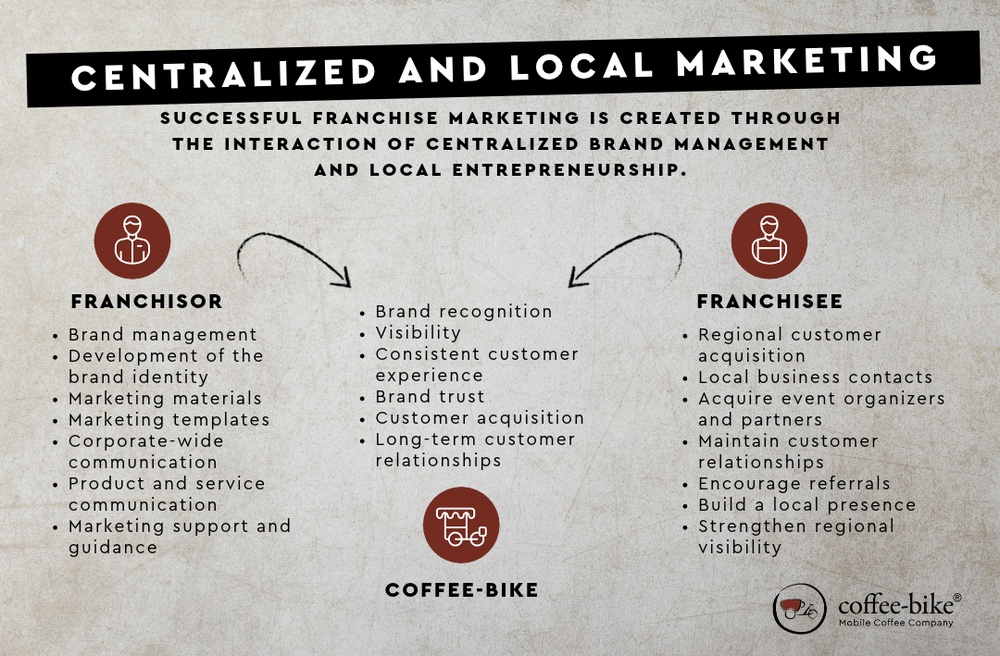
Successful marketing in a franchise usually results from the interplay between centralised marketing measures and local activities. Whilst the franchise head office develops and maintains the brand, franchisees are responsible for raising the profile of their business in their own region and building customer relationships.
Centralised marketing: What tasks does the franchisor undertake?
An important component of franchise marketing is centralised brand management by the franchisor. In addition to traditional advertising measures, many franchise systems also undertake digital marketing tasks, which can make it easier for individual franchisees to reach potential customers.
Franchisor marketing may include, for example:
- Developing and maintaining the brand identity
- Creating promotional materials and marketing templates
- Developing consistent marketing messages
- Cross-platform brand communication
- Product and service communication
- Managing the central corporate website
- Search engine optimisation (SEO) for national search queries
- Corporate-level social media marketing
- Planning and implementation of national advertising campaigns
- Digital lead generation for enquiries and prospective customers
- Supporting franchisees with marketing queries
As a result, franchisees do not need to develop or finance many basic marketing tools themselves, but can draw on existing structures, reach and marketing processes. At the same time, local customer acquisition remains a key component of on-the-ground marketing, as regional networks, personal contacts and local advertising measures continue to play an important role.
Local marketing: How franchisees tap into their region
Local marketing is just as important as centralised brand management for a franchise. After all, even the best-known brand does not automatically attract customers in a particular region. This is where franchisee marketing comes into play. Typical tasks include:
- Establishing regional business contacts
- Reaching out to local businesses
- Collaborating with event organisers
- Securing catering contracts
- Maintaining existing customer relationships
- Establishing a presence at fixed sales locations
- Leveraging word-of-mouth recommendations
- Maintaining a social media presence
Personal contact, in particular, often determines whether a prospective customer becomes a long-term customer.
Why centralised branding and individual initiative go hand in hand
Successful marketing in franchising usually stems from the interplay between these two levels. Head office ensures a professional framework, a consistent brand image and overarching marketing initiatives. The franchisee contributes their market knowledge, regional contacts and personal initiative.
Whilst the franchise head office boosts brand awareness through, for example, the company website, social media channels or national campaigns, franchisees use their own online presence to connect with businesses, event organisers and other regional stakeholders. This brings together national visibility and local networks, which can provide lasting support for customer acquisition.
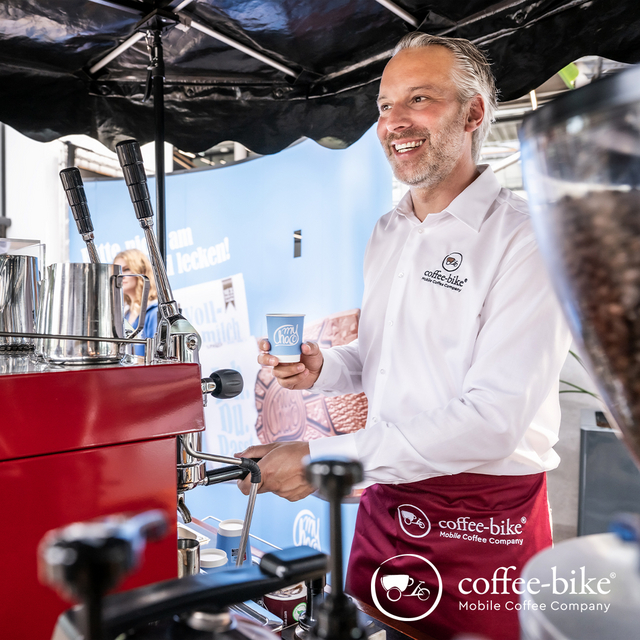
At Coffee-Bike, this synergy is particularly evident in business development: the head office sources catering enquiries from across Germany and matches suitable bookings with franchise partners. At the same time, the partners independently develop further business opportunities in their own regions, for example through contacts with town fairs, weekly markets, businesses or festivals. Their regional knowledge and personal networks complement the head office’s marketing and sales activities and help to further raise the brand’s profile locally.